Beginning with skyscrapers and extending to the assembly line production of commodities like cars and appliances, there always exists an element of hidden power – that power often comes in the form of hydraulic systems. These systems not only offer incredible power but can offer incredible control over said power because of the fluid used inside a hydraulic system; because of this, hydraulic systems are perfect in situations requiring perfect efficiency and strength.
The Fundamentals of Hydraulic Systems
Essentially, the hydraulic system works on the principle discovered by Blaise Pascal: Force applied to an enclosed and incompressible fluid will be equal at every point throughout the fluid.
Now comes the basic setup for a hydraulic system: there’s the hydraulic fluid reservoir that holds hydraulic fluid; then there’s the pump that pressurizes this fluid; there’s the steering or flow control valves which control how the fluid flows; and lastly, there’s the hydraulic’s power converter or machine – a hydraulic motor or hydraulic cylinder – that utilizes the pressurized fluid to convert fluid power into actual mechanical power.
Important Applications of Manufacturing
Within the manufacturing industry, hydraulic systems find many applications related to automation and accuracy of tasks. Robotic systems consist of robotic arms that can be operated with hydraulic systems and can perform repetitious tasks faster and more accurately than human beings can ever achieve. Presses with hydraulic systems can create metal parts with press forces of thousands of tons and make it possible to manufacture metal parts on a large scale for different machines like cars and appliances.
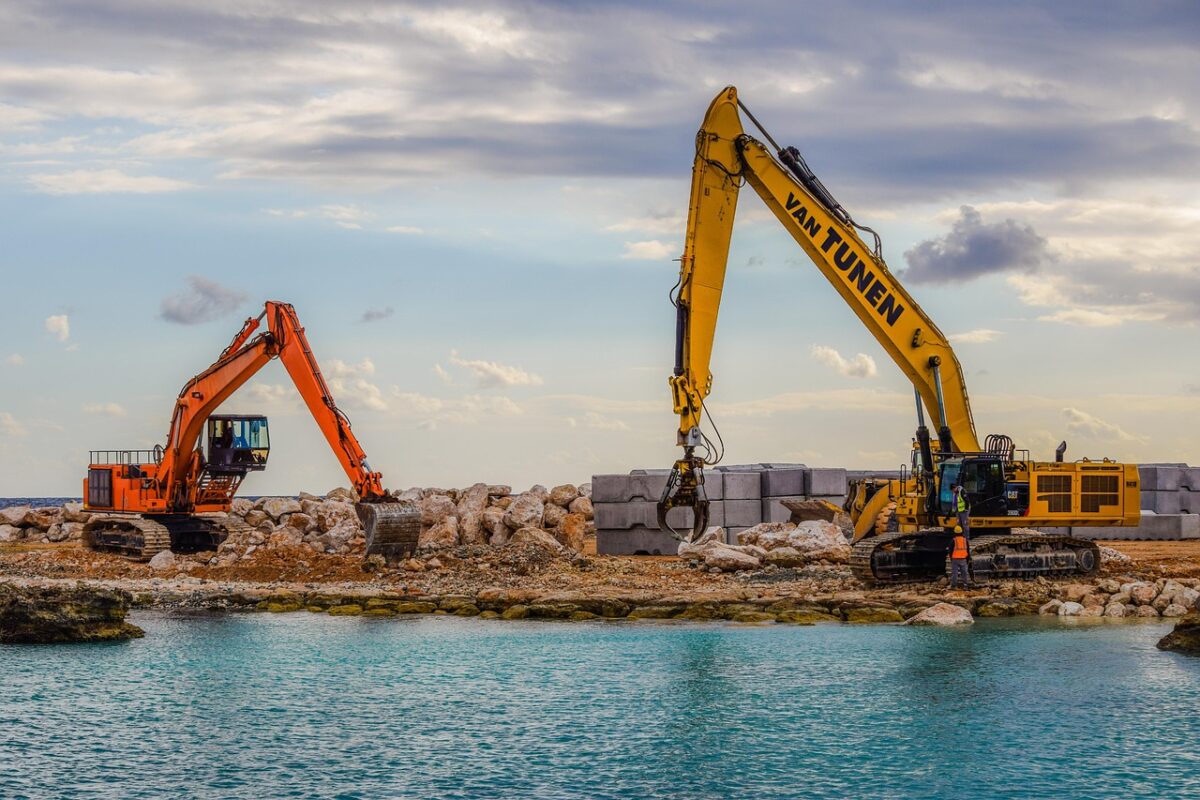
The construction sector depends largely on hydraulic power for running large and powerful machines. Excavators laying foundations, cranes used to lift steel structural members into position, and bulldozers used to move earth rely on hydraulic systems for operation. The tremendous lifting power and robustness of hydraulic systems ensure that workers can handle heavyweight materials safely and efficiently. In addition, hydraulic systems are applied in support structures for safety on construction sites when excavating trenches, among other safety applications on site.
Advantages
The reason why hydraulic systems are so widely adopted has to do with several important benefits they provide. These systems offer an unmatched level of power density because they can generate considerable power while still being compact and small in size. This allows these systems to find optimal applications in vehicles because it’s important for vehicles to not only provide power but also to be compact so that they consume fewer resources and space.
Additionally, these systems offer considerable accuracy and control when compared to others because they can create tiny adjustments while carrying huge loads at once. With the help of a hydraulic testing service, these machines can last the test of time.
Powering Tomorrow’s Innovations
Hydraulics can never be viewed only as a tool; instead, it can be regarded as a basic technology which promotes progress in manufacturing and construction processes. With advancements taking place at a faster pace in these fields, there would only be increasing demands for more efficient and more accurate machines. The concept of hydraulics would once again form the starting point for developing new machines that would construct and shape the world around us.